


September 1, 2026: Greetings from Taipei! I’m about seven weeks post-birth of my second daughter. Everyone is healthy and we are doing well. I’ve been using any spare time to work out and spend time with my oldest, who is still adjusting to all the changes. I am planning on getting back to a more regular cadence of writing in the coming weeks because I miss it. In the meantime, I thought I’d share some of the reading I’ve been doing over the past couple of months.
#1 The New Fatherhood
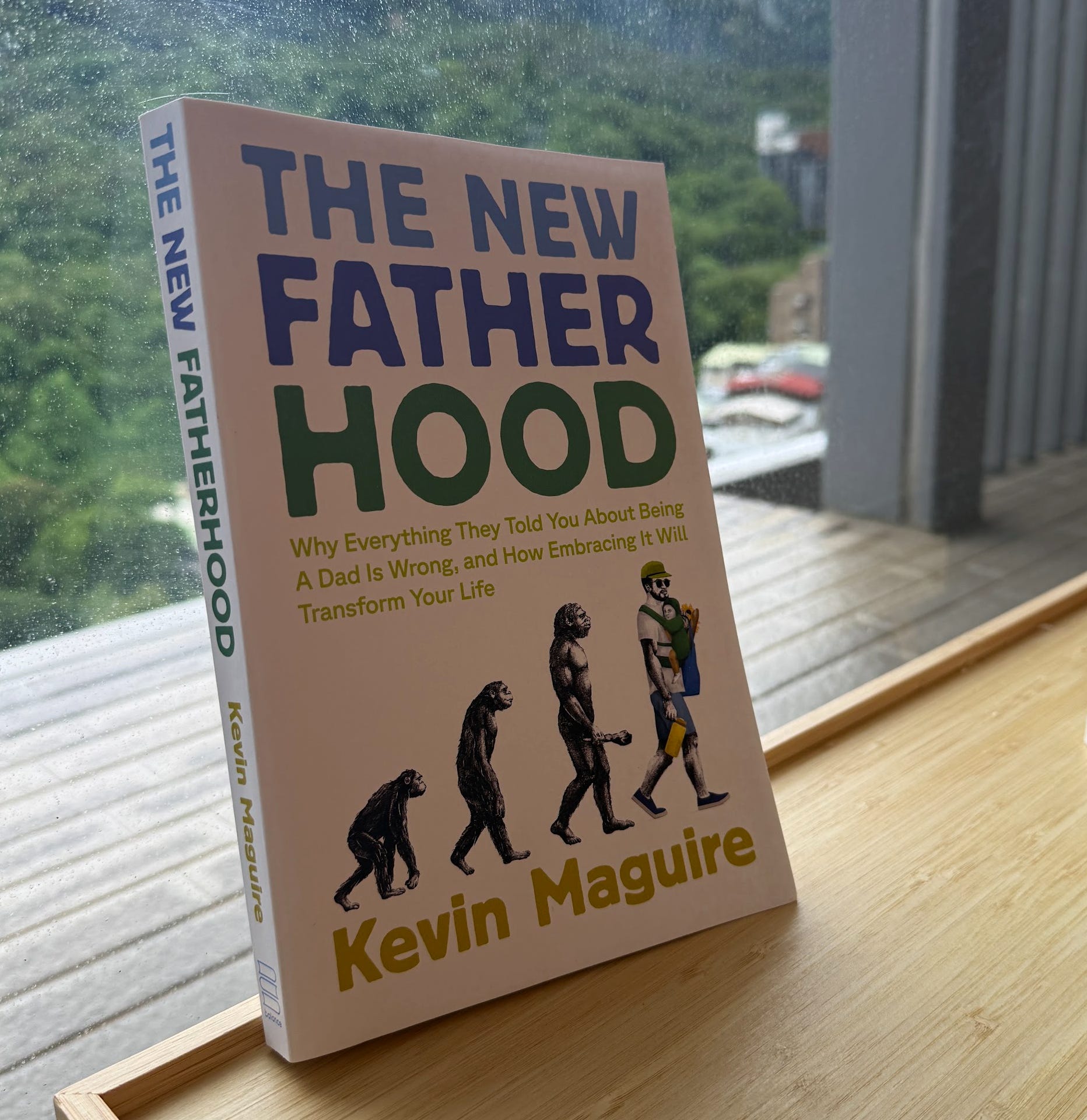
I enjoyed reading this book as I was in the final month before our second daughter arrived. It was a good chance to sit back and reflect on the whirlwind that has been the first three years of my daughter’s life. Now that she’s three, parenting has definitely challenged me, so it was great to read Kevin Maguire’s account of a dad many years ahead of me. Kevin is also someone I’ve gotten to know through writing and sharing online over the past many years. His journey has been similar to mine in becoming a node in a network of people across the world who feel permission to share and talk about such a vulnerable topic as fatherhood:
I committed to writing once a week and seeing where it led. If nobody read it, that would be fine. Still, I’d do it for a year. What happened soon after stunned me: emails flooding in from fathers around the world, each one carrying a similar message: “I thought I was the only one.” Men I’d never met wrote paragraphs that could have been pulled from my own diary. Fathers from different continents, cultures, and backgrounds all described the same feelings of disconnection, despair, and the crushing guilt that came with it.
I specifically loved this idea of “the tunnel.” The last year has been a lot more challenging than expected as we have been in the thick of helping a toddler adjust to increasing awareness and emotions.
Martin, a FOK and close friend, once introduced me to the idea of the Tunnel—a place where all parents reside while their children are under five. Dads in the Tunnel can cycle through bliss and despair on a turnaround that would give nonparents whiplash. I’d never suggest wishing those early years away, but know that once you’re out the other side, it will be different.
Alas, if you are looking for a reason I’ve been writing less, it’s because I’m in the tunnel.
#2 Young Money
I finished Jack Raines’s Young Money in a week. He is a borderline Gen Zer (cusper?) but I think his book was a good insight into many of the challenges as well as the opportunities his generation will face. Somehow he traveled without a plan, got into day trading, went to business school, and blew up his life several times in his 20s. He published this book as he was turning 30. It is an impressive arc.
But also, Jack is a fun writer. He does a good job of telling his story and sharing his own failures, questions, and decisions along the way. I found it fascinating because he very much went through the same waking-up experience I did in my early thirties, but he did it in his early 20s. I’ve been noticing that many of my readers of The Pathless Path are making bigger shifts earlier in life, and this book will be a good addition for them.
At 23, he looked ahead at his career path (literally the path I followed mindlessly for ten years) and said, hmm, maybe that isn’t the best use of my time right now. He took a step back, realized that when he was older he might actually wish to work more, and decided that, as Kevin Kelly urges, it was time to “goof off.”
I honestly wish I had a book like this in my twenties, because it would have helped me realize:
The kind of adventures you can go on in your twenties expire because you just don’t want to do the kind of bare-bones travel later in life
There are costs to narrowly pursuing success at work as your core quest
There are many more possibilities for a modern career and being without a job may actually enable you to be more ambitious over the long term because you can quickly try new kinds of work that don’t require being employed first.
I did wake up to many of these things, but it took me quite a bit longer than Jack.
I’ve also loved watching Jack share his book and have so much fun with it. I’ve always been saddened by how little fun people have with their books.
His chapter on apathy was one of my favorites, and when I texted him about this, he told me that he had to rewrite it several times because he was disappointed with his writing and felt it wasn’t honest.
The final book was well done. It was honest, clear, and fun to read. If you are in your 20s or 30s and like memoirish non-fiction, you’ll enjoy this book.
#3 Two books on China and Asia
I’ve been reading books about Asia for the past several years and finished two that were very good recently. I keep a list here
Deng Xiaoping and the Transformation of China
This book took me a while to read and was slow at times but was a great summary of Deng Xiaoping’s life, which happened to coincide with the bulk of the major events in China over the past 100 years, from the Long March to Tiananmen. The book really picks up at the end when Deng, in his 70s, finally comes to power and urgently pushes the government, industry, and society at large aggressively toward freer markets and capitalism. I was shocked at the speed of some of the shifts, especially in places like Shenzhen:
In 1979, Shenzhen, just over the border from Hong Kong, was a town of some 20,000 residents, but two decades later the population of Shenzhen city, which now stretched to some of the former rural areas nearby, was approaching 10 million and still growing rapidly.
Deng is a very impressive person and a political survivor through many periods in which he was cast out (but not completely destroyed) by Mao. It raised many questions in my mind about the inevitability of the capitalistic shift that Deng oversaw, and that has led to so much prosperity in China and beyond. Was it the result of Deng’s singular efforts and genius, or was it low-hanging fruit from decades of political incompetence under Mao? I think both are probably true, but no one has perfect answers, and that’s why it’s worth reading books like this.
I think one thing as a Westerner reading this book that was notable was that there is not really any first-hand account from Deng about his experiences. He didn’t have a journal, private correspondence or anything like that. These sorts of firsthand accounts seem much more present in Western history, and so it gives us a sense of various leaders’ inner thoughts. But in this book, I’m left guessing. What did Deng actually think?
Homeseeking
I’m a sucker for a good historical fiction book, and this one did not disappoint. The book follows two people from two Shanghainese families pre- and post-WWII and stays with them as they have to escape China, move around the world, and eventually do come to find each other again. Given my wife’s family history with World War II and her grandfather becoming a refugee here, it’s always fascinating to read books about that experience. Based on my study of the history, the book was very true to how people actually experienced things, especially in Taiwan. Very enjoyable read and a good perspective on both the Chinese diaspora and Waishengren who fled to Taiwan.
All my Asia recommendations
I keep track of all my favorite books on Asia here.
#4 How to win without crushing your soul
Graham, a reader, emailed me this talk and I really enjoyed it.
It’s always great to hear people talk about familiar ideas but in a fresh way. I really like the three ideas he referenced in this chat and was also inspired by how Graham has built a second career mentoring university students. It’s a long-term goal of mine to be involved somehow in a university.
#5 Relaunching my audiobook with Authors Equity
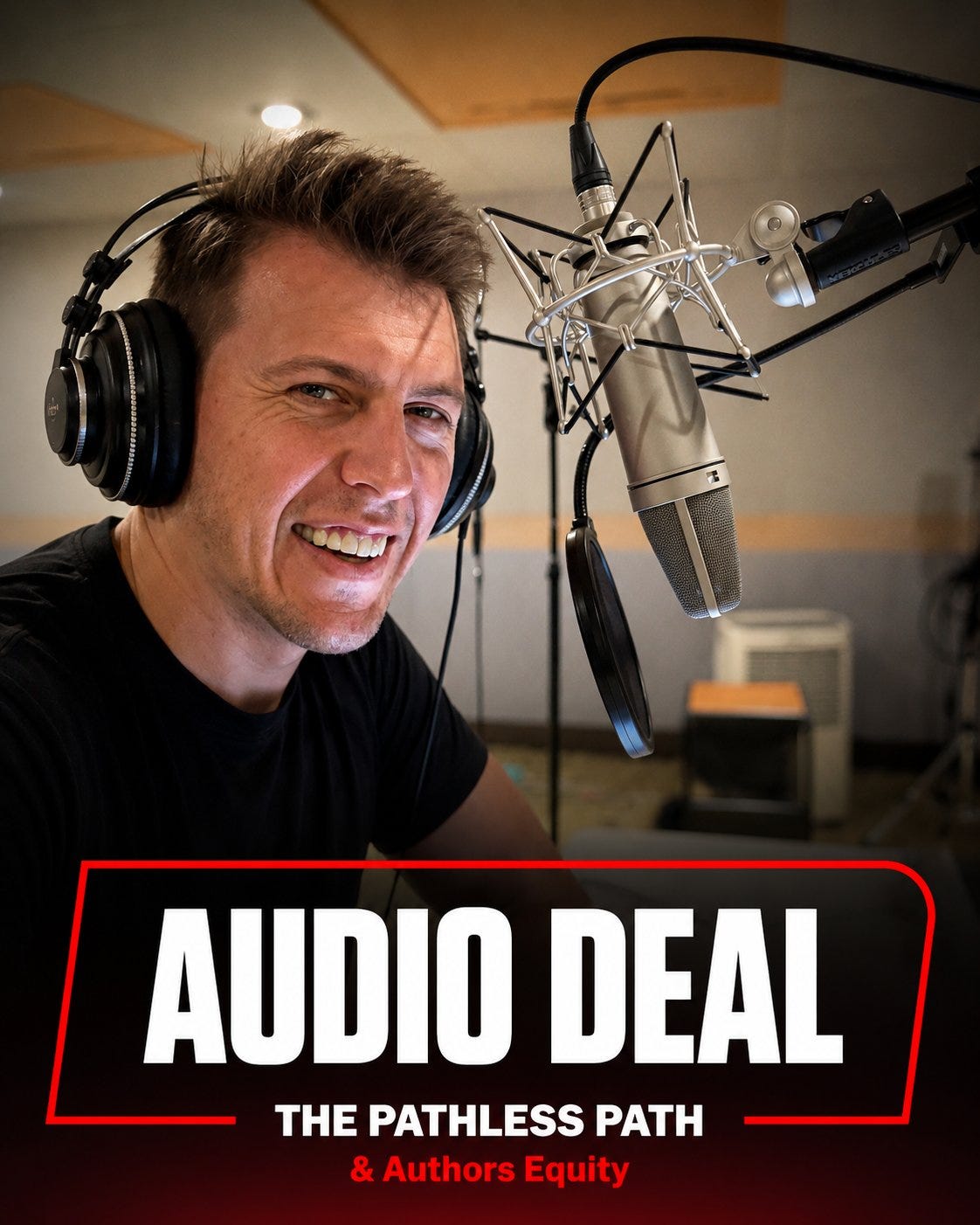
I recently signed a deal with Authors Equity to relaunch the audio version of my book The Pathless Path. They are a hybrid publishing house that works on royalty-sharing arrangements.
The reason I’m signing with them is that audio is a terrible deal as a self-published author. Because the dominant player (Audible) has a natural monopoly, they are able to take the majority of profits.
Publishers, however, can get better deals, and through profit sharing and going wide to other platforms (like Spotify), I am in a good position to actually make more, even though I’m sharing the upside with AE.
I’ll write more about this, and about why I’m excited to finally be partnering with a publisher after going solo for many years, but I will likely do that on my side publication on modern publishing.
I re-recorded the book in June in Taipei, including a new intro. The new audio version is launching September 22 and will be available for the first time on Spotify and Libro.fm, as well as in a new version on Audible.
If you’ve thought about grabbing the book but haven’t yet, now is a good time.
If you’ve already purchased the audiobook in the past, you will still have access to that version forever.
#6 What happens when wealth grows more than income?
We live in weird times. As I discussed in my boomer blockade update, the boomers are the first financialized generation, and because of this they have captured the biggest share of wealth increases over the past four decades and continue to do so, despite many members of that generation retiring each year:
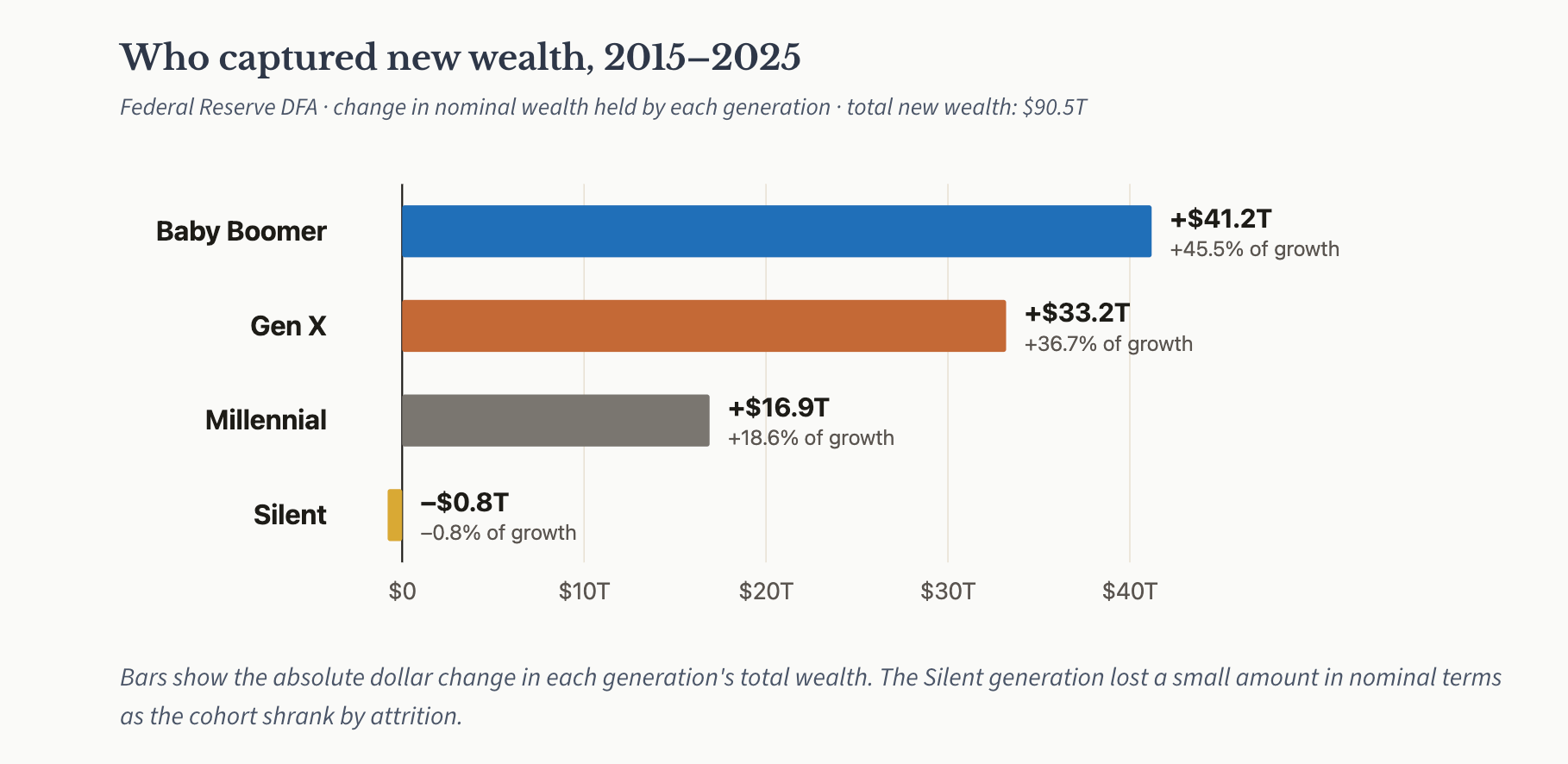
This is genuinely weird in the arc of history — we just haven’t had elderly generations that are building and growing wealth even as they age out of the workforce. I suspect this is why so many people are mad at the boomers. But, as you can see, Gen X and Millennials are very much following in their footsteps and I don’t think this will change.
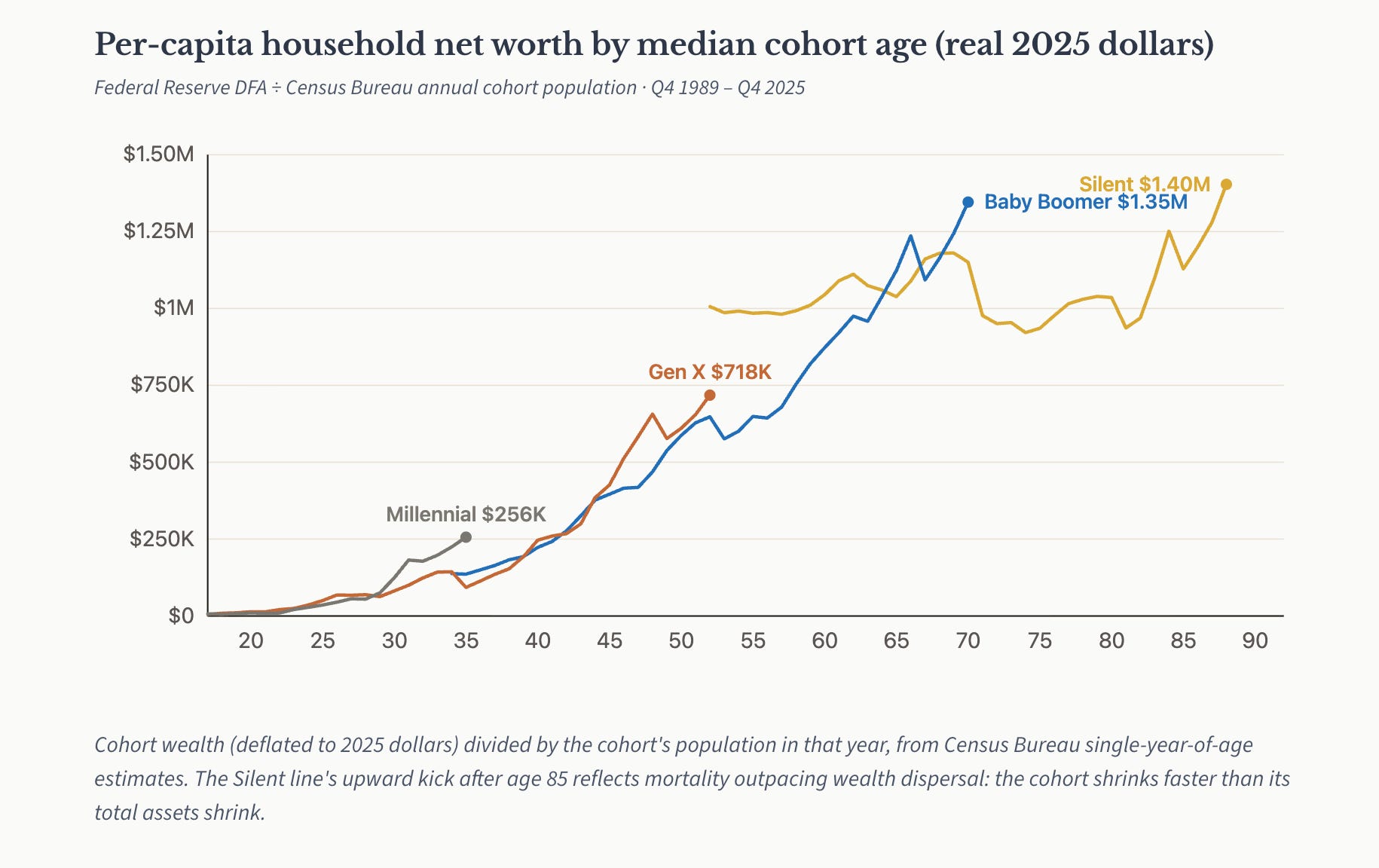
We live in financialized times now. Work hard, sure. But make sure you are invested in the broader economy of hard workers.
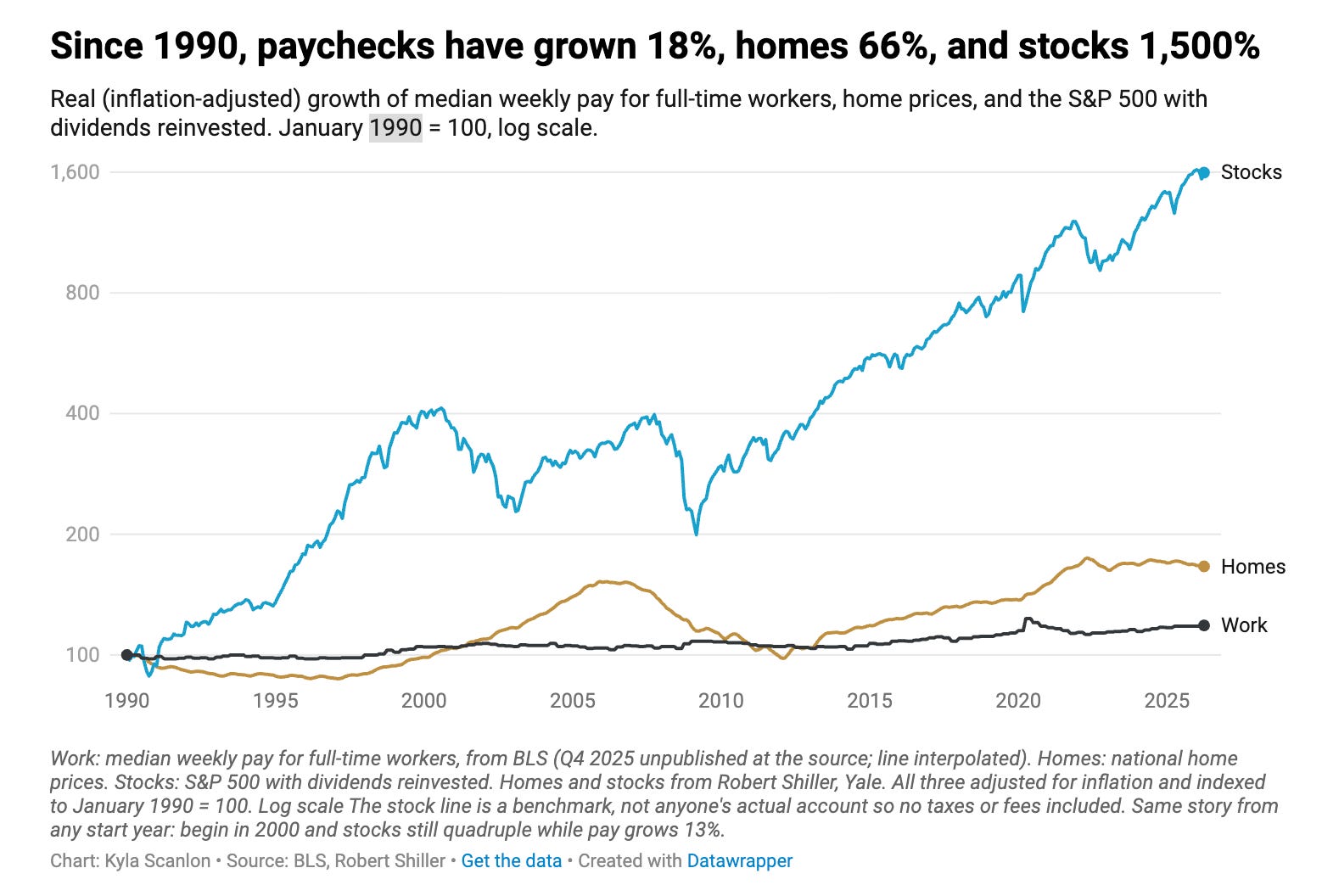
kyla scanlon has a great deep dive in her recent article on this shift. This chart stood out:
And so we now live in times where elderly people in the US are spending more than younger cohorts (and I don’t see why this would slow).
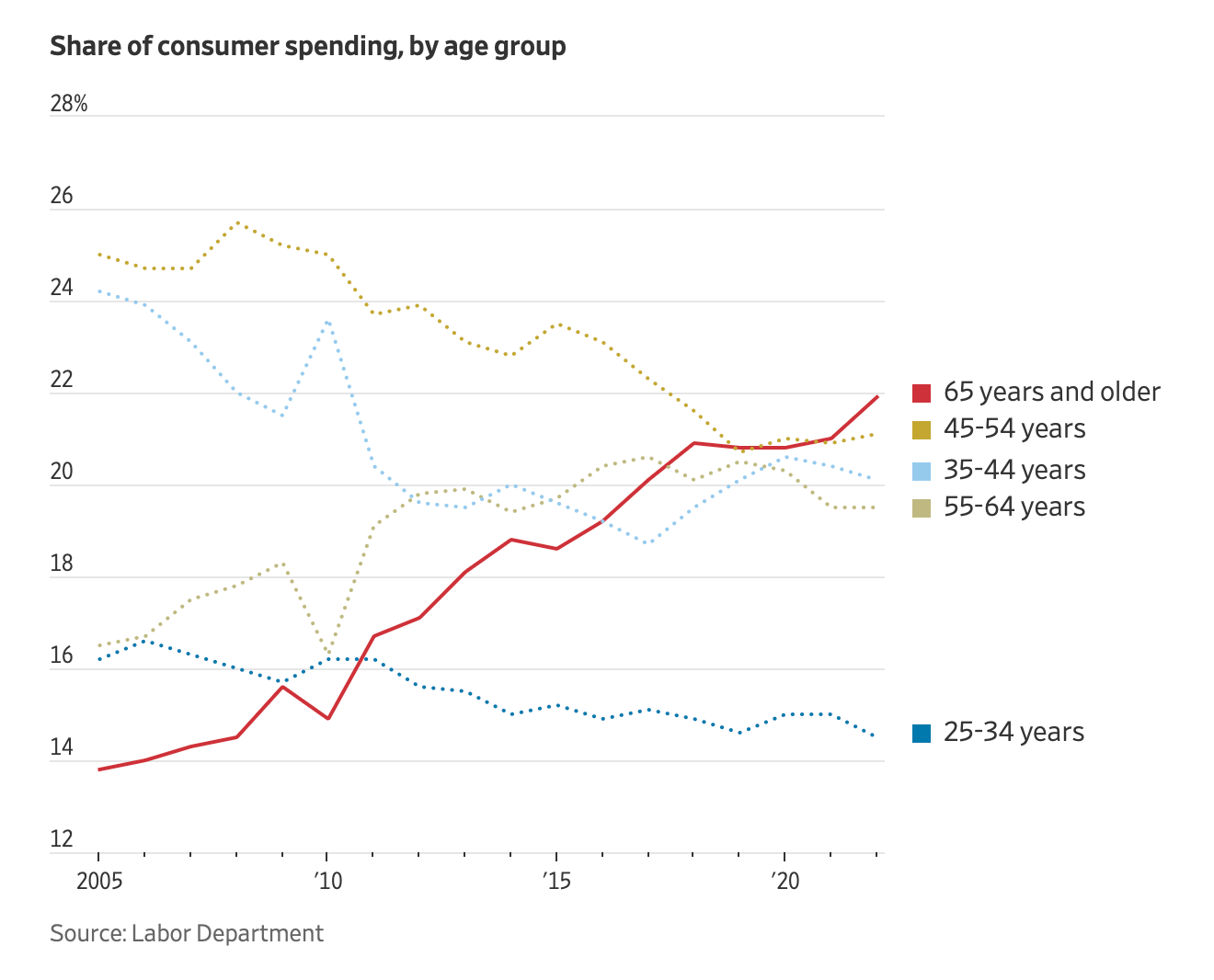
What does this all mean for how we think about work and money?
Our cultural norms are still largely anchored around the idea of an “honest day’s work.” Work hard and you will be rewarded. But many boomers are now in the weird position of having followed that life strategy earnestly, and now, in retirement, earning more from the money they invested along the way. They are outearning their former hard working selves as passive fund managers. It’s no surprise, then, that more than half of millennials got help from parents to buy their first home (compared to 12% of boomers).
With AI in the mix, non-stop technological change, and increasing awareness of wealth gaps, I think paying attention to what younger people are thinking about work, success, and a life path worth pursuing is important. Kyla covers all of this, including how Gen Z is increasingly nihilistic about it all.
Check out my books?
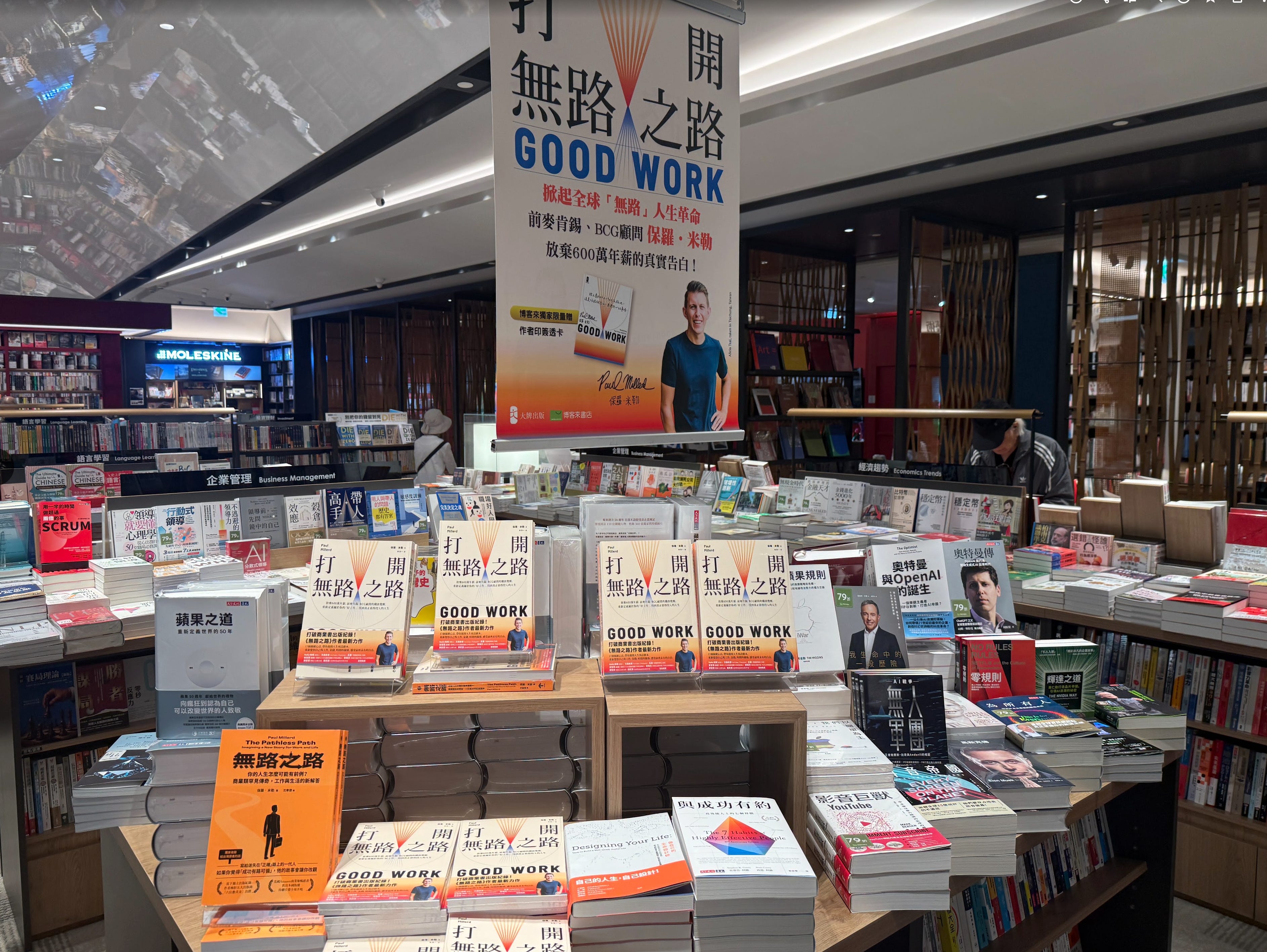
I’ve been doing some form of public writing since 2015. I’ve somehow figured out how to hack a living by writing books and launching premium art editions of my book. If you like what you read here, you’ll probably enjoy my books The Pathless Path and Good Work:

If you’d like to join a virtual community of others on “pathless paths” from around the world, and get access to courses, tools, and other resources I’ve created over the years, you can join The Pathless Path Community. Our recent WhatsApp community is very active if you like hanging out on messaging apps instead of Circle.
Some things I endorse:
Readwise is offering 2 months free (I use it for book notes and reviewing highlights). Or two months free on
Readwise Reader, which I use for RSS reading and e-book reading
Crowdhealth, an alternative to US health insurance that I’m still using while abroad
Postbridge: A social scheduling app created by a reader without crazy upcharges for more accounts
Kindred, a home-sharing app
Collective for handling your S-Corp accounting needs
If you received this and find yourself in a state of outrage, thinking, “What is this?” I strongly encourage you to unsubscribe below. It is your God-given right, and there is plenty of other good stuff online.
A reminder: I don’t check unsubscribe alerts and never look at my subscriber list. So if you feel like unsubscribing, you can do so below.
This letter sits in my email for a while but haven't got time to sit down quietly to give it a read, but its on my schedule during this mid autumn festival in Taipei where people are bbq-ing.
Same in the tunnel as my daughter is 2yrs old, plenty of work. I start writing my book after reading pathless path, and is very interested in modern publishing and what audio equity offers.
The young money part is also interesting as I work in University and yes, young people has more options and path compare to previous as resources from government. academic, business are pouring in, they get to experienced more than us ( i'm 40+) and there are so many options nowadays in a university that could go exploring life.
"Work harder inside the org" isn't just unfun, it's the wrong lever — the only way to actually catch the wealth curve is to own equity in something, which is the whole case for leaving in the first place. Curious whether you think Gen Z's nihilism is actually a rational read of that math, or just cynicism dressed up as one.