


November 11th, 2025: Greetings from Taipei! I haven’t done a roundup of links in a while and figured it might be fun to share a few things I’ve been reading and thinking about over the past few months.
But first, a quick hardcover update
Sales of the new hardcover are going well.
We’ve pre-sold about 175 books to 20 countries now. Sharing the flags here because it’s kind of wild to see so much support from around the world!
🇺🇸 🇬🇧 🇨🇦 🇸🇬 🇹🇼 🇸🇰 🇷🇸 🇵🇹 🇳🇿 🇲🇺 🇯🇵 🇮🇱 🇮🇪 🇭🇰 🇩🇪 🇨🇭 🇧🇪 🇦🇺 🇸🇪 🇰🇷
And we’ve started shipping out some of the early copies to people who purchased the Medici tier, as well as people helping me promote the book.
The rest of the hardcovers are in port in NY, and the notebooks are en route from Morocco right now. Barring any logistics issues or global pandemics, we should be able to get these to people before Christmas (we can gift wrap and customize these with notecards, just add it in the comments of the cart).
I also shared an unboxing video this week:
If you’d like to check the book out or want to share it, check it out here.
Onward
#1 The appropriate amount of effort is zero
I love this essay from Michael Ashcroft - it’s a simple but powerful idea:
There is an appropriate amount of energy required for each activity. Holding a cup, turning a steering wheel, or writing a blog post all need exactly the amount of energy that they need. This may sound like a truism, but if it were so obvious, why do many drivers often realise they are driving with a vice-like grip, with tension running up into their shoulders and jaws?
Let me share my slightly unusual definition of “effort”: it’s the felt experience of expending energy beyond what an activity requires, like tensing your brow when you try to understand something, or the excess tension in your hand when you hold your phone.
Using this definition, it’s clear that the appropriate amount of effort for any activity is zero.
This doesn’t match with many of the stories we have about work and what’s worth doing, but if we accept this definition, where can you try less?
#2 You are not broken
Matt D'Avella had a great video essay on the aggressive hacks people employ in the self-help and creators worlds to hack attention.
In the video, he also highlights the pressure on creators to avoid anything even partially critical of other creators, especially those with large followings. This transforms the creative landscape from a space of healthy intellectual debate into one of transactional relationships, where people are always looking to “trade up” favors to people with bigger and bigger followings. This pressure is part of the reason I’ve scaled back my podcast and mostly focus on interviewing people I’m genuinely curious about.
This tension is a challenge, though, because it’s beneficial to befriend anyone who can amplify your work. If Oprah offers to cross-promote with me, I’d likely do it. Over the past couple of years, I’ve purposefully avoided this kind of favor trading with people whose work I don’t enjoy or tactics I don’t respect. Over the long term, I think this isa good approach because it means I’m sharing things I genuinely like and collaborating with people that inspire me.
Managing this is hard, and if you aim to have an audience for your work, you need to think about these kinds of tradeoffs. Many successful people are willing to grow at almost all costs, and so you just need to know what you are willing to do too.
One way I’ve leaned against the pressures is simply to write what I actually think. My essay on why you might not need to suffer and broader thoughts on the bad effects of hustle ideas and language have likely rubbed a few people the wrong way, people who could have otherwise “helped” me. But that’s okay because I stand behind the ideas.
Anyway, I appreciate Matt adding some thoughtful disagreement to the conversation.
#3 Jevon’s & Baumol
Alex Danco proposes a persuasive theory of how dual forces: rising costs from Baumol’s cost disease and abundance via Jevons’ paradox (tasks get cheaper, we consume more) combine to shape a new reality of work in the age of AI, not to mention political weirdness as our work realities evaporate:
In an interesting way, this hints at where Baumol’s will finally run out of steam - because at some point, these “last 1% employable skills” no longer become substitutable for one another. They’ll become strange vestigial limbs of career paths; in a sense. We have a ways to go until we get there, but we can anticipate some very strange economic & political alliances that could get formed in such a world.

#4 The housing theory of everything
This was the title of a good essay from a few years back. The takeaway was stark:
Western housing shortages do not just prevent many from ever affording their own home. They also drive inequality, climate change, low productivity growth, obesity, and even falling fertility rates.
Every young person I know, including those who have bought a home, has been talking about this for years. Among my friends, even those who were able to secure a home, there is a sense that the system isn’t quite working. On top of that, everyone sort of knows that many people are able to afford inflated prices with support from parents.
With the recent inflation and doubling down on restrictive housing policies (outside of rare places like Florida, Arizona, and Texas), this has led to some pretty wild shifts. While I’m a happy renter, I do wonder if I’d be thinking about my path differently if housing hadn’t become another speculative financial asset.
Check out the following charts I came across just in the last month.
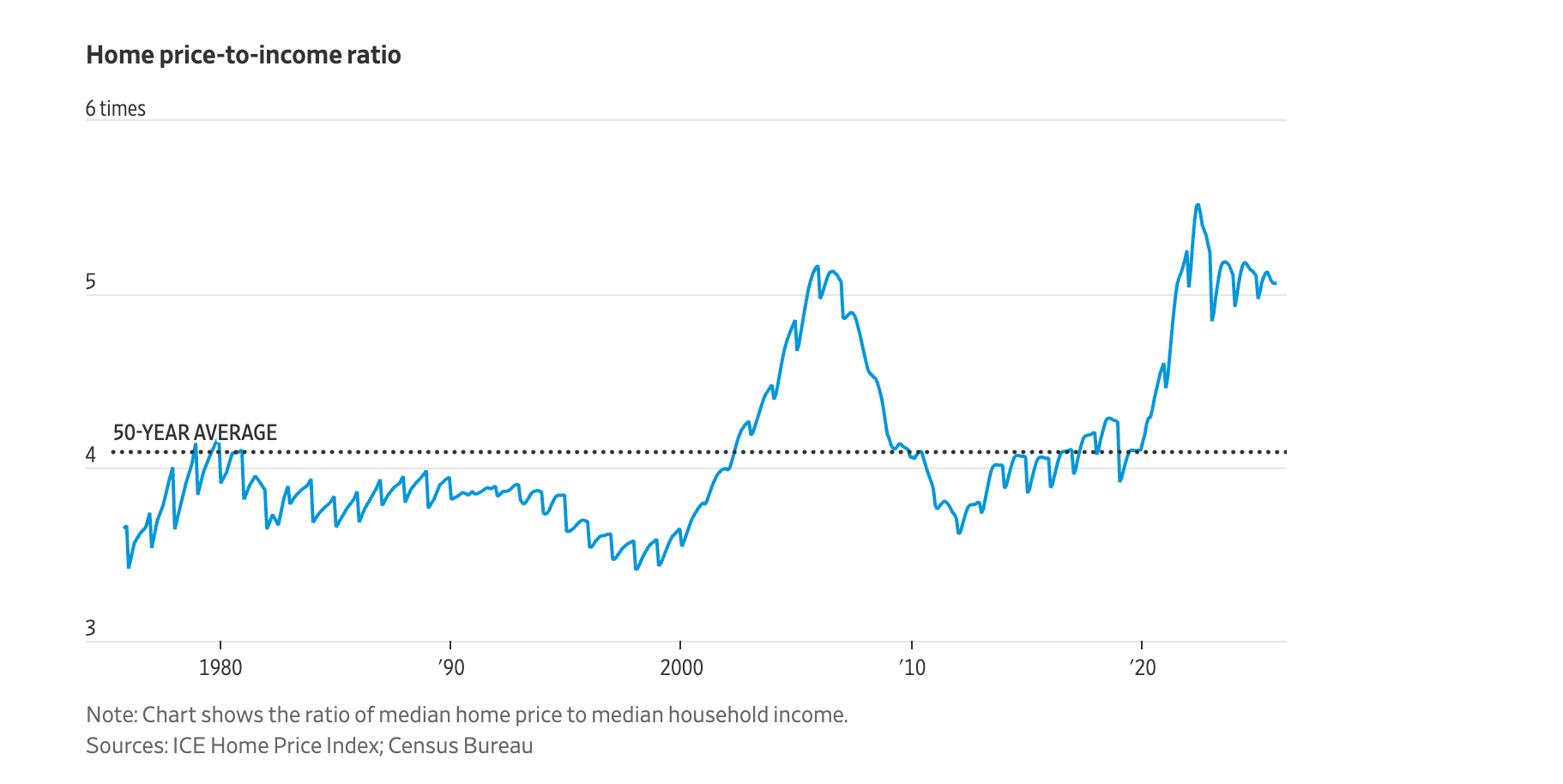
Price-to-income is the highest it’s been in 50 years
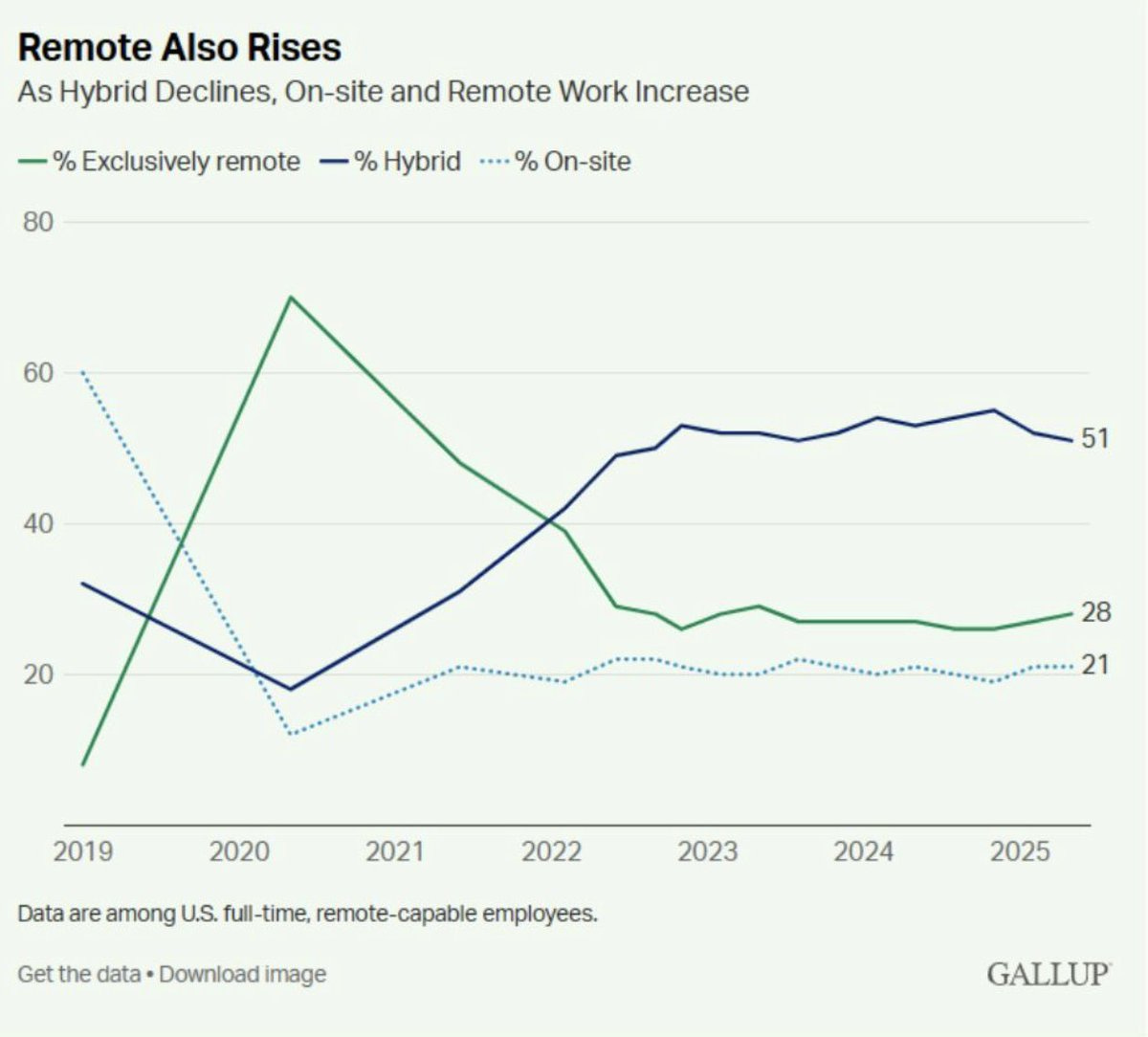
Remote work kind of killed the retreat from cities?
Someone shared how remote work seems to have plateaued at 28%. While this is awesome and I love to see it, it’s certainly not high enough for people to be making permanent housing decisions to live in more rural areas. Most people know they have to be able to change jobs and have access to opportunities in a modern career, and knowing only 28% of jobs are remote (though this seems high?) is not enough to permanently reinvent, like so many were thinking of doing during the pandemic.
The median homebuyer was born in 1969.
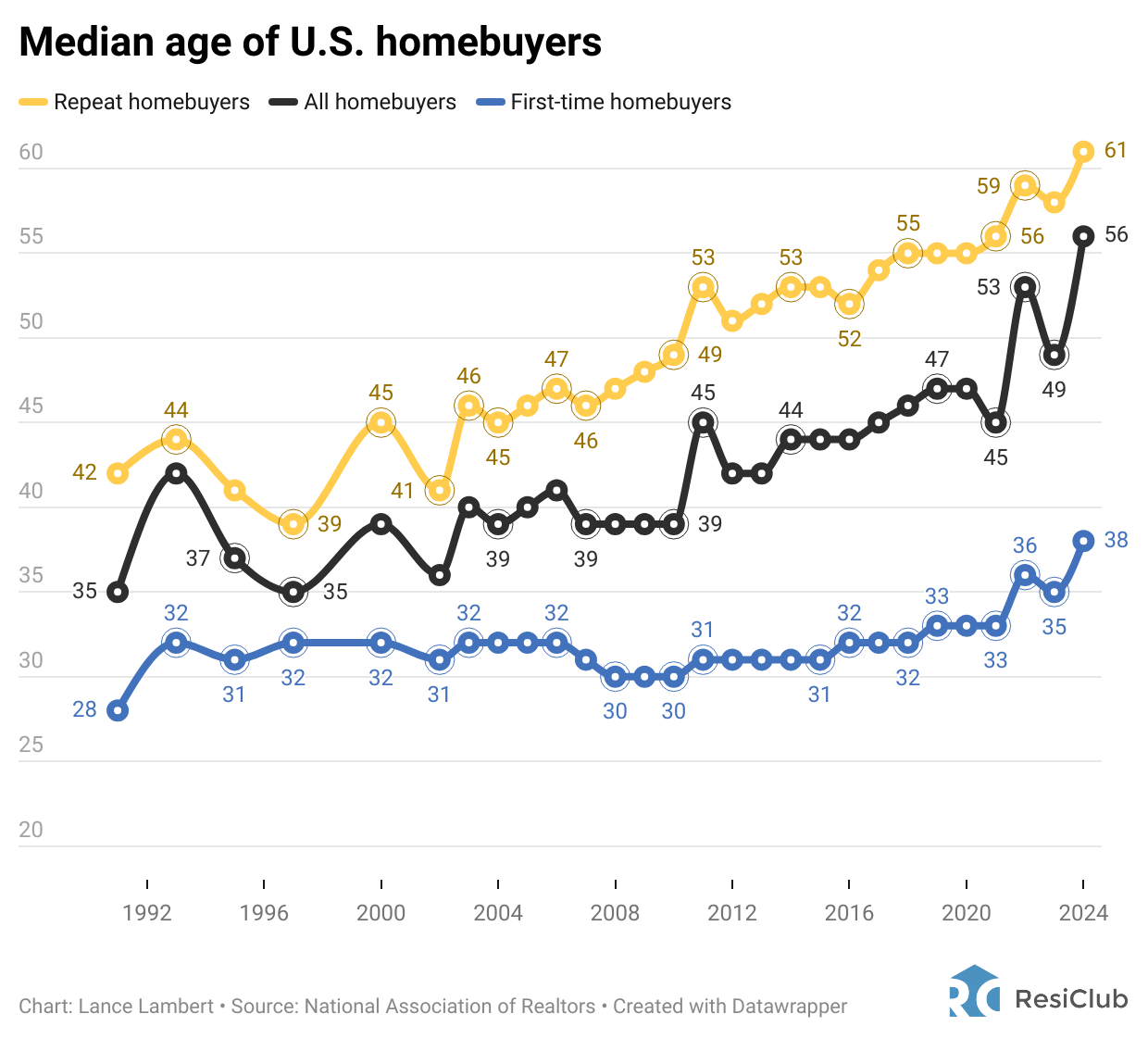
Lots of people’s wealth is tied up in homes, and so it is political suicide to reimagine a different path. I suspect, however, that this cannot hold.
#5 Phone and kids
Emily Oster’s books are great for pregnancy and the first few years of parenting. She shared a nuanced but straightforward analysis of confusing data and hot takes from other parents.
She recently did a nice post on the impact of phones on kids. Here’s her takeaways:
It’s difficult to definitively determine whether social media affects teen mental health because most of the studies we have cannot reliably show causality.
There are tradeoffs to allowing your teen to use social media. Although the effects of social media are negative on average, there are people who benefit from it.
Phones are a clear distraction in schools, and the evidence so far suggests that banning them improves learning.
Regulation on social media age limits is unlikely, so it falls to parents to set boundaries. Much like teaching kids to drive, we need to decide when they’re ready for phones and guide them in using them responsibly.
#6 Books
I’m really enjoying the current reads:
Breakneck by Dan Wang: Strong, clear, and interesting comparison between two modes of state planning, China vs. the US.
Composing A Life: Just started, but a very good book recommended by Billy Oppenheimer that details four women’s different approaches for literally “composing” their lives
Conscious Accomplishment: His new book is very good. If you’ve been someone who has gone through a work reinvention or gotten stuck on spiritual paths, this book is for you. I’m sort of blown away with how much detail Scott has managed to inject into his own journey from startup founder to someone who has a much better relationship with work and life itself. His idea of the “inner purgatory” described something I definitely went through from 2017 to 2019:
“I call this period inner purgatory. Inner purgatory is the intermediate state between focusing on your inner work and feeling invigorated to take creative action in the world. When you’re in inner purgatory, you desire to accomplish things from an updated perspective, but find it inexplicably difficult. You may struggle with a lack of motivation, inspiration, or energy for external goals, despite knowing that you want more for your life than doing inner work all the time. Activities that once came easily may feel difficult. You may no longer feel like you have the same raw horsepower you once did. You can try to will yourself to push through things, but without the natural force behind you, you eventually exhaust yourself.”
Heyo, you made it all the way down here
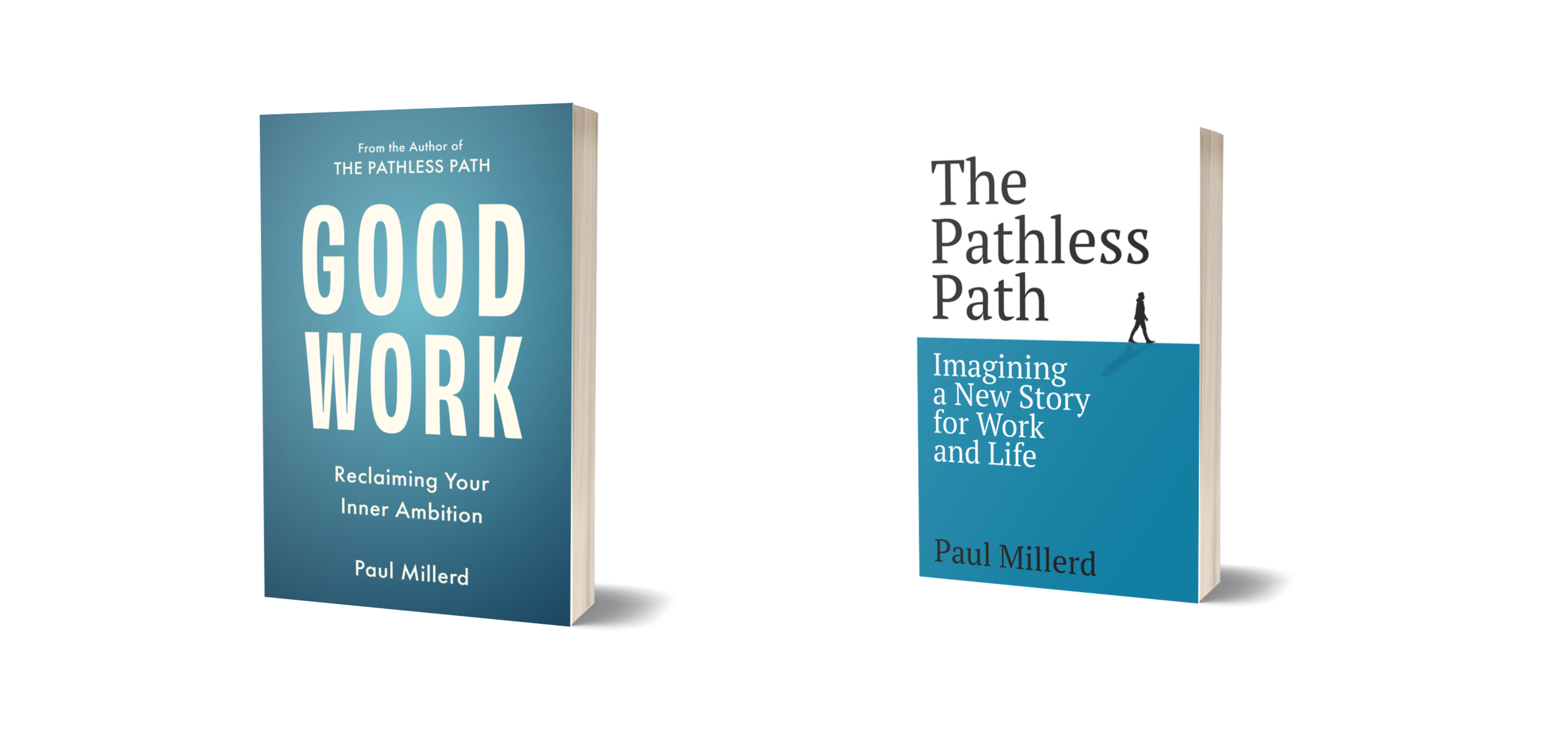
I’ve been doing some form of public writing since 2015. I’ve somehow figured out how to hack a living doing things like writing books and launching premium art editions of my book. If you like what you read here, you’ll probably enjoy my books The Pathless Path and Good Work:
If you’d like to join a virtual community of others on “pathless paths” from around the world, and get access to courses, tools, and other resources I’ve created over the years, you can join The Pathless Path Community. Our recent WhatsApp community is very active if you like hanging out on messaging apps instead of Circle.
Some things I endorse:
Readwise is offering 2 months free (I use it for book notes and reviewing highlights). Or two months free on
Readwise Reader, which I use for RSS reading and epub reading
Crowdhealth, an alternative to US health insurance that I’m still using while abroad
Postbridge: A social scheduling app created by a reader without crazy upcharges for more accounts
Kindred, a home-sharing app
Collective for handling your S-Corp accounting needs, and Nat Eliason’s Build Your Own AI Apps course
If you received this and find yourself in a state of outrage, thinking, “What is this?” I strongly encourage you to unsubscribe below. It is your god given right, and there is plenty of other good stuff online.
A reminder: I don’t check unsubscribe alerts and never look at my subscriber list. So if you feel like unsubscribing, you can do so below.
I feel you are an awesome writer Paul, can you teach me how I can be like that too😅